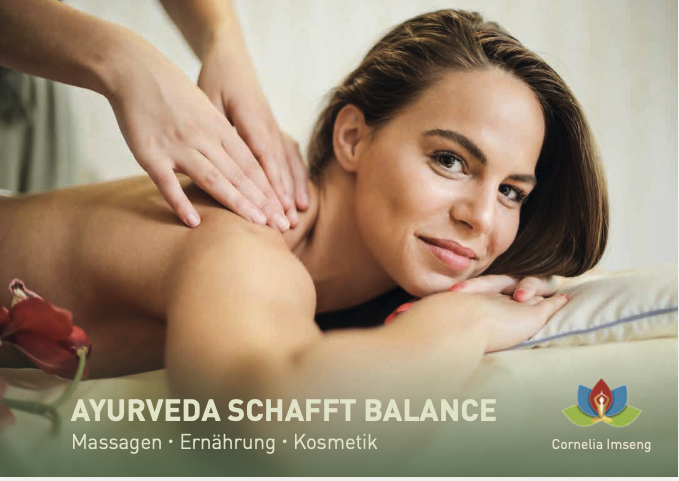
Ayurvedic massages are an important part of the traditional Indian healing art of Ayurveda, which has been practiced for more than 5,000 years. These massages are based on the philosophy of harmonizing body, mind and soul and promoting general well-being. Ayurveda assumes that every person has an individual constitution made up of the three doshas (Vata, Pitta, Kapha). Ayurvedic massages help to maintain or restore the balance of these doshas.
The massages are usually carried out with special, warm oils that are tailored to the respective constitution and needs of the recipient. These oils often contain herbal extracts and essential essences that have a calming, cleansing and healing effect.
The best-known Ayurvedic massages include:
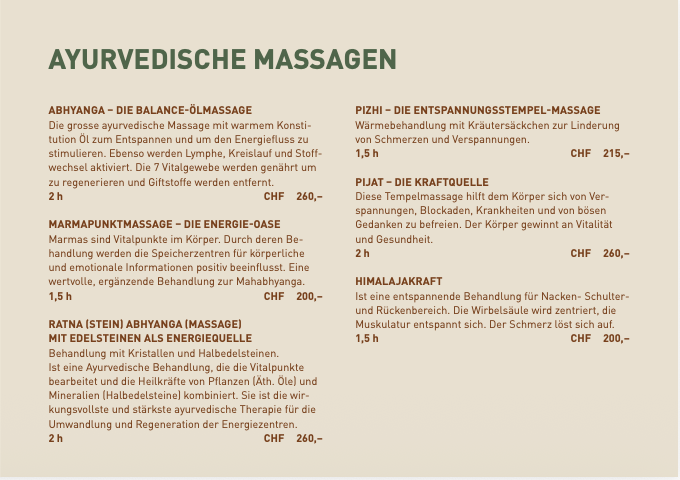
- Abhyanga: A full body massage with warm oil that reduces stress, promotes blood circulation and strengthens the nervous system. It supports the detoxification of the body and provides deep relaxation.
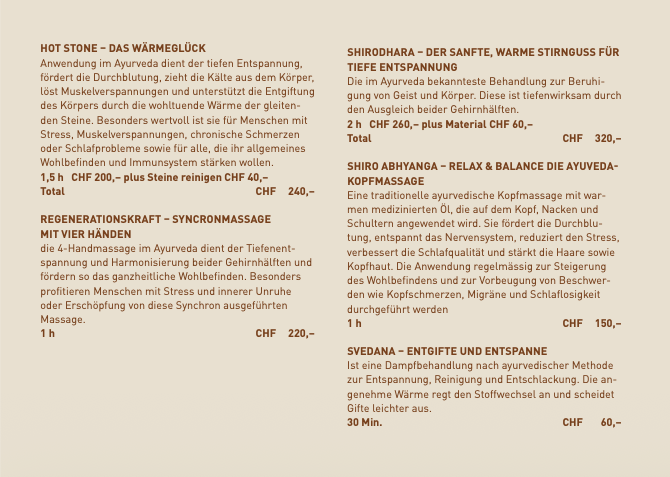
- Shirodhara: A treatment in which a steady stream of oil is poured onto the forehead. This method calms the mind, reduces anxiety and insomnia and promotes mental clarity.
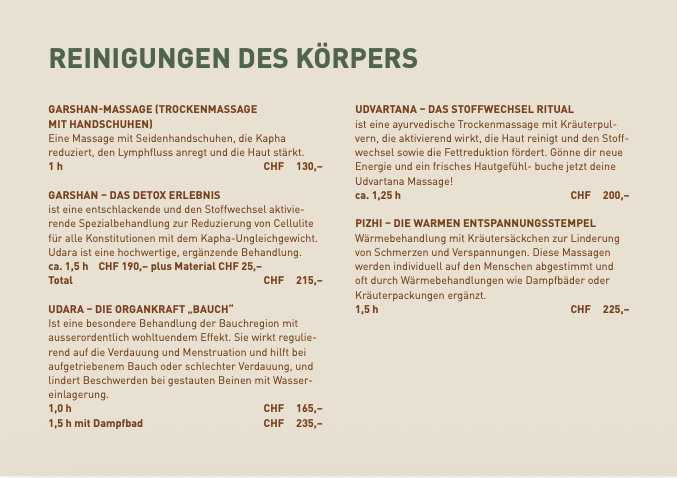
- Garshan: A dry massage with silk gloves that helps to stimulate the metabolism, tighten the skin and stimulate the lymphatic system.
- Pinda Sweda: Warm herbal bags are used here to relieve muscle tension and promote blood circulation.
Ayurvedic massages not only work on a physical level, but also have a profound effect on emotional and mental well-being. They promote detoxification of the body, improve skin elasticity and help the body to regenerate and rejuvenate. They are usually part of a broader Ayurvedic treatment plan that includes nutrition, herbal medicine and other health-promoting practices.
These massages should always be carried out by trained Ayurvedic therapists who know the individual constitution of the client and can adapt the massage accordingly.